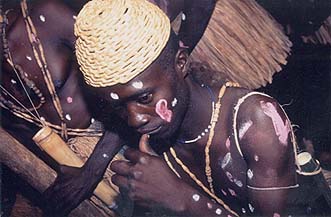
Polyphonic music from Central Africa By Jean-Marie Juvin Le Toboggan in Décines, a venue that programs a highly eclectic range of performers, is hosting two groups that represent the polyphonic forms of music of Central Africa.
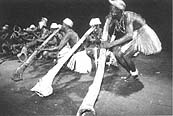 Little wonder, then, that the improvisations done during polyphonic singing are so various. Only two instruments have this exclusive status: one shaped like a rattle, typical of this settlement; the other a set of cowbells that is fixed to the ankles. The Pygmies also use short-lived instruments picked up on their nomadic travels, and abandoned just as quickly. This music, a tremendous lacework of voices, responds to the echoes of a deep forest. Some 400,000 in number, the Banda are the largest ethnic group in Central Africa, divided into 50 subgroups with their own customs, dialects and musics. The Linda are one of these ramifications. "Ongo" means breath, and is also the term for a polyphonic ensemble of horns carved from wood. These are played to worship the ancestors, as a rite of passage for young boys. The size of these instruments varies: from 20 centimetres, for those made from antelope horns, to two metres for those carved from the roots of kapok trees and papaya trees (already burrowed into by termites). The company from the village of Tragode has its roots in Ouaka, a region of bushy savannah. It is made up of farmers directed by Wapounaba Ferdinand, a 60-year-old veteran, and of "blowers" from the new generation. The traditional form has be reworked by Barthélémy Etoumba, who has provided a singular choreography, as well as interludes featuring slot drums, five-bar xylophone, sitars, gombi... to give this ritual an expression of the way it is evolving. A winter's evening not to be missed: in a warmed-up auditorium, savour the strength of Africa's living traditions. Polyphonic music from Central Africa. Translated by Paul Jones |